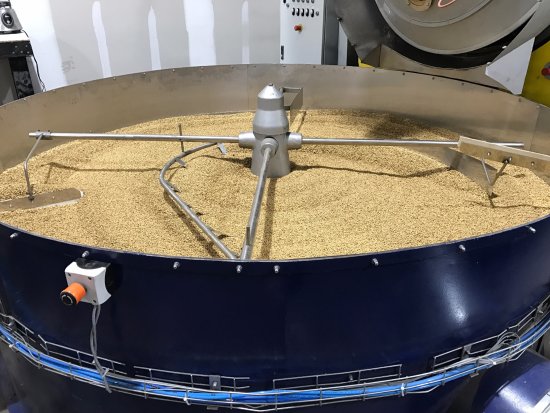
The Process of Malting
WHAT IS MALT?
Originating centuries ago, malting is a captivating process in which the natural enzymes within barley convert its starches into fermentable sugars. Despite its seemingly simple nature, malting demands precision and expertise to master its subtle complexities.
The process unfolds through several significant stages:
Cleaning & Testing

Steeping
Germination
Kilning
Malt Roasting

1. Cleaning & Testing
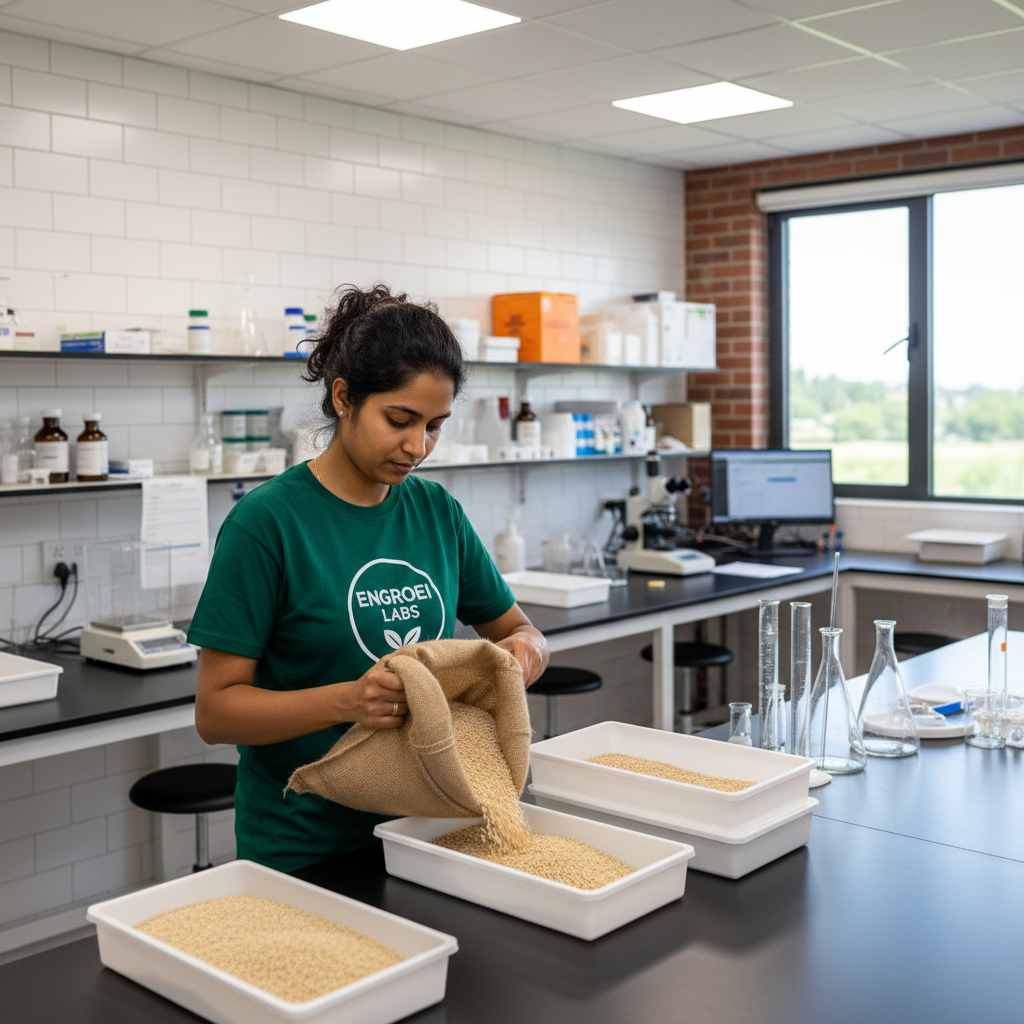
After harvest, the grain is stored in large bins. Before moving forward, it undergoes a series of tests, starting with a visual inspection. Any grain showing discoloration, signs of disease, mold, or foreign material is rejected. Next, a germination test is carried out to confirm that the grain is still alive and to assess its sensitivity to moisture. A protein test is also performed to evaluate quality. If the grain meets the requirements for malting, it is sent to a cleaning facility where small kernels, dust, chaff, and stray grains are removed. Once cleaned, the grain is brought back to the Red Shed to begin the steeping process.
2. Steeping
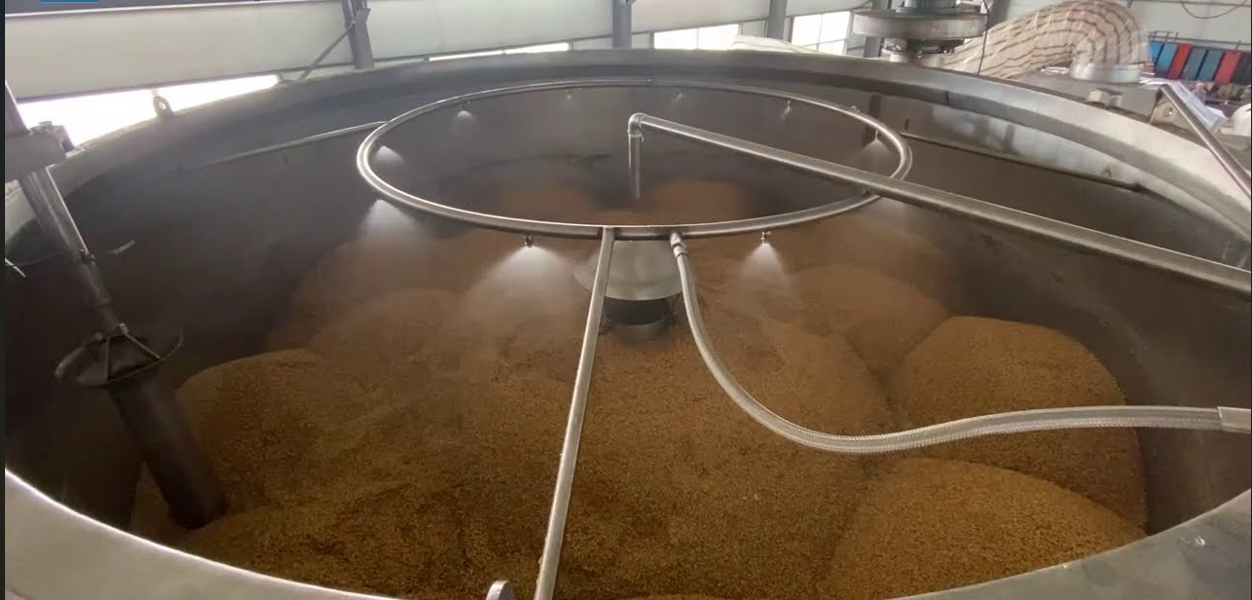
In the following stage, the grains are soaked and submerged in water to reactivate their natural vitality. As the water seeps through the outer layers, the grains’ inherent alpha and beta amylase enzymes begin converting the starch in the endosperm into sugars. This grain-and-water mixture is kept in stainless steel vessels and aerated with compressed, oxygen-rich air to promote healthy respiration. During this phase, a considerable amount of carbon dioxide is produced, which must be continuously removed to maintain the grains’ health. Overall, the steeping process typically lasts up to 30 hours.
3. Germination
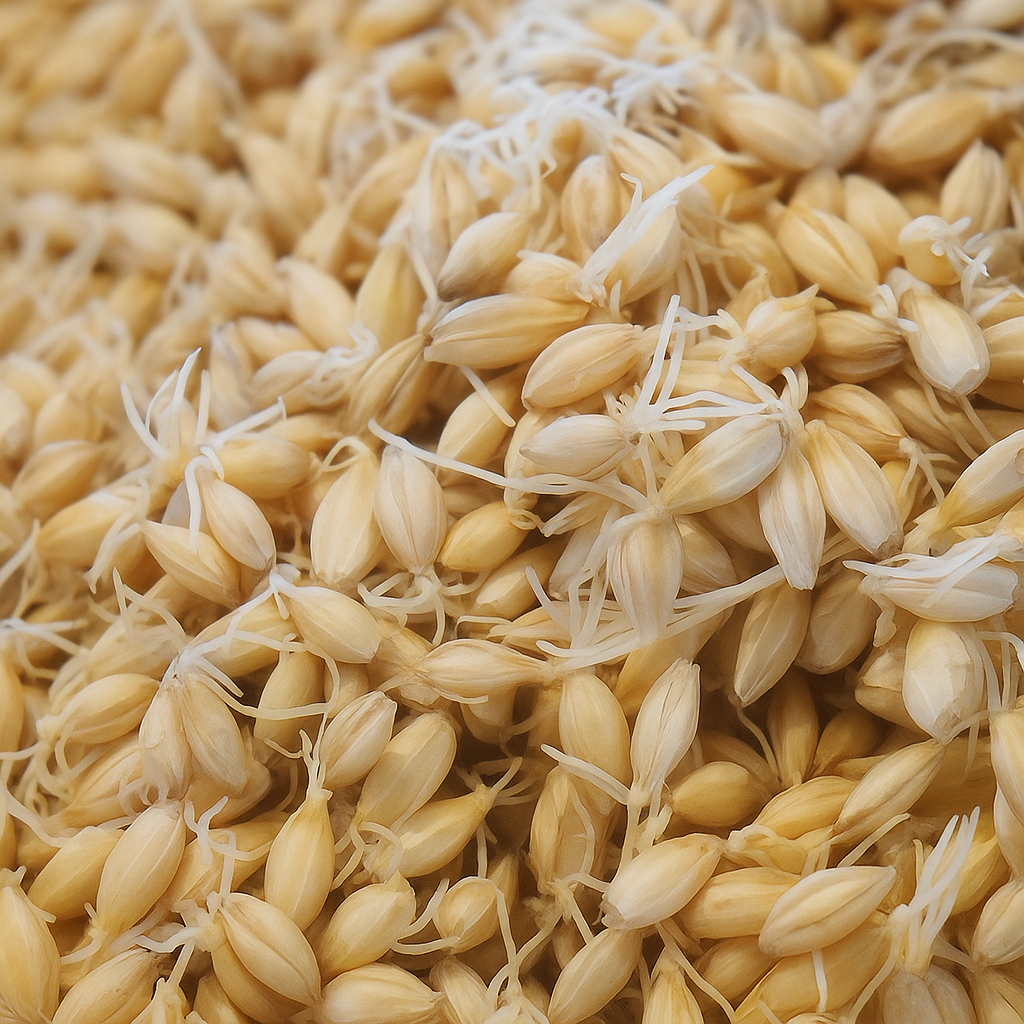
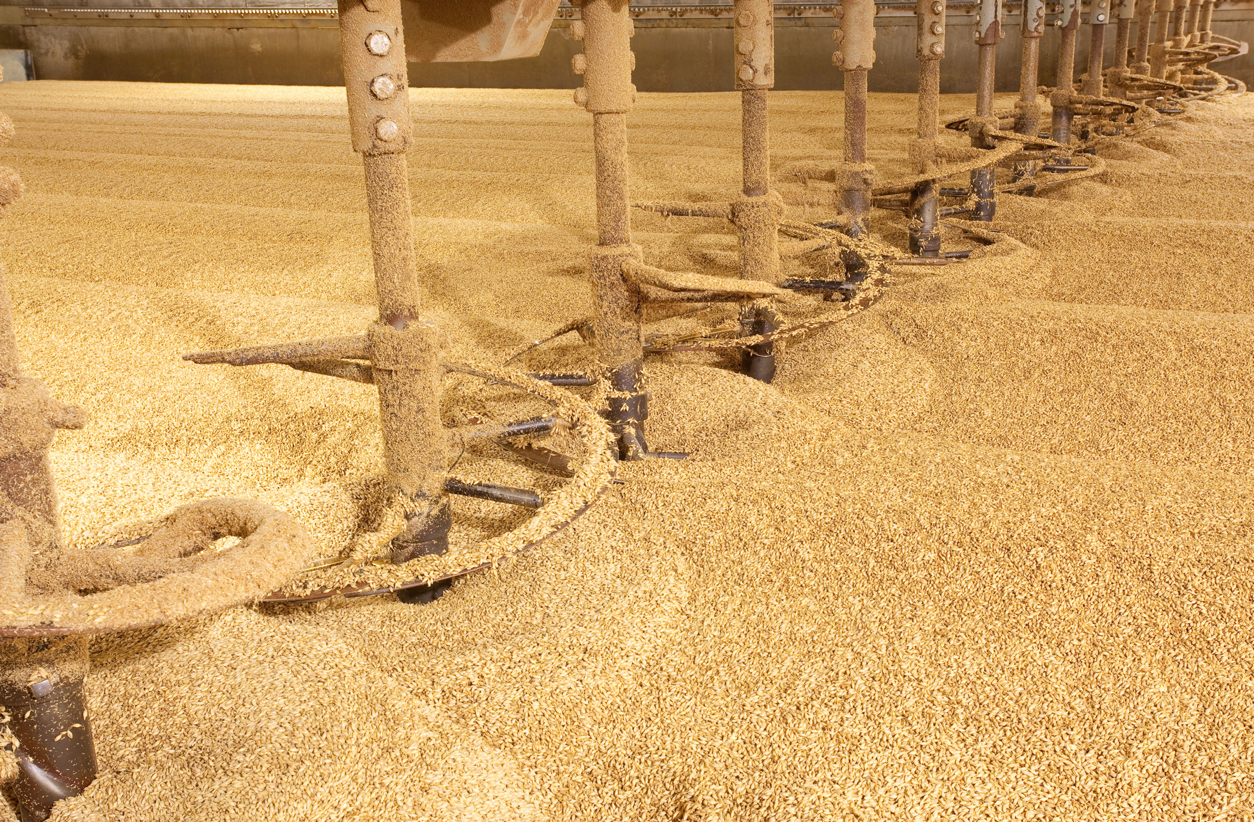
In this stage, the enzymes become fully active, completing the conversion of starches in the grain into fermentable sugars. The grains are kept under cool conditions, typically between 15–20°C, away from direct sunlight, and are provided with ample moisture. As the grains generate considerable heat during this process, the grain bed must be regularly turned and lightly sprayed with water to prevent overheating or scorching. This step is crucial to the malting process, as it largely determines the final quality of the malt. The entire procedure usually takes about four to five days to finish.
4. Kilning
When the grain develops the desired characteristics, the next step is to deactivate the enzymes by applying hot air from beneath the grain bed. This air must flow smoothly and evenly through the entire layer to ensure consistent drying. For some types of malt, the air temperature can reach up to 95°C, reducing the grain’s moisture content to below 5%. This low moisture level makes the malt easier to store and transport.
5. Malt Roasting
After the malt has been properly dried, it undergoes another round of grading to eliminate any metallic particles or foreign impurities that may have entered during the malting process. The malt is then carefully sieved to ensure uniform grain size. Once this quality check is complete, it is packed in bulk containers or bags according to customer specifications, and only the finest malt is dispatched to its final destination.